Every month we watch & recap a children’s movie with the Earthquakes and unpack the sneaky media tropes that reinforce bigotry, supremacy, and problematic devices.
Family Movie Night Recap
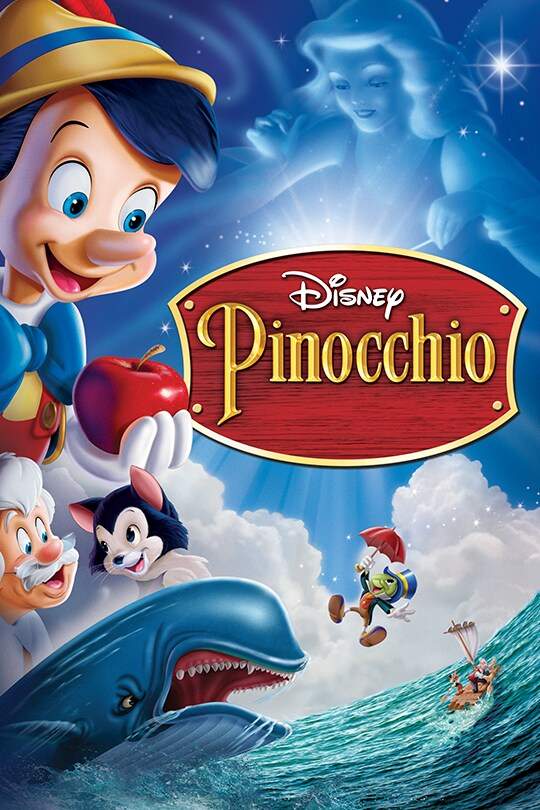
Pinocchio (1940)
Family Movie Night
PROBLEMATIC TROPES TO UNPACK AS A FAMILY
Welcome to the Family Movie Night Series
Obey your parents - OR ELSE!!! A Horror Flick For Kids
Pinocchio (1940)
Screened with R2 (age 8.5) & Q (age 10.5)
Watch Pinocchio (afflink)
Spoilers Ahead!
Content warning for child abduction, trafficking, anti-semitism, racism & general childhood horrors
Ashia R:
It’s Family Movie Night, and R2’s pick is the 1940 classic Pinocchio.
I guess he was fascinated by the Pinocchio scene in Shrek 3 where Pinocchio’s nose grew every time he lied.
Q and I are also watching the first season of Once Upon A Time, and honestly the show is really hard to follow if you haven’t caught up on all the basic Disney classics. The Disney universe is kind of a self-selling eco-system. So right away, Q was so excited to see Jiminy cricket.
I haven’t seen Pinocchio in over 30 years, so all I remember about it was cringing on the edge of my seat while watching this little puppet make the WORST decisions.
I had completely forgotten about Figaro, Geppetto’s ADORABLE kitten. Now I’m remembering how UNREASONABLY ADORABLE this cartoon kitten was. And the animation really holds up. Figaro perfect mix of cute little paws and grouchy sass.
The movie is still cute, so it’s hard to tell from the opening scene that this movie is over 80 years old.
UNTIL, Gepetto uses his puppet to kick the cat in the ass. R2 is furious. How do we even explain this weird, casual animal abuse?
Later, we get a cute little scene of mechanical music boxes and cuckoo clocks, complete with a mechanical wooden mother with a bare-assed child bent over her legs, smacking the crap out of him. As he flails and screams in agony.
Q is… confused? Shocked? Alarmed and appalled? Something in there, except it’s such a freaking weird thing for a kid like him to see he can’t even compute what’s going on.
Oh here comes the magic fairy. In your standard American 40’s vision of beauty. Willowy arms. Bumpy blonde hair. Sparkly blue eyes. Chunky mascara. Existing entirely for the pleasure of men (and man puppets).
Magic fairy sweeps in, converts Pinocchio to a human-ish boy, and promotes Jiminy Cricket to SIR Jiminy Cricket, official ‘conscious’ after he starts ranting about ‘what’s wrong with the world today’ like some kind of fox news talking head.
Jiminiy gets some sweet new threads and he’s off to work – teaching Pinocchio the difference between right and wrong through whistle lessons.
Growing up with these movies, it’s interesting to see how we were raised to believe life is a series of decisions between RIGHT and WRONG. A ‘straight and narrow path’ where the best decision is clear and obvious, it’s just a matter of discipline to make the obvious choice.
I wonder if the adults writing this shit every actually… thought for a second? About what that even means?
Like what kid wakes up in the morning and is like “I’m gonna make the BAD choice!”
I mean, I know there are kids who are gonna rebel just for shits. But honestly – to paint this false idea of ‘the right path’ as so obvious and clear seems like a confusing, shame-y message for little kids.
It’s Pinocchio’s first day of school! As we oan over the village children kissing their moms and bouncing down the street, in the corner we see a kid forcefully dunking another child’s head into a fountain, which seems… harsh.
Boys will be boys! I guess. Yikes.
Enter: Honest John, the shifty fox who follows Pinocchio to school and isolates him on the street, along with his his dopey nonspeaking cat sidekick who sneakily reaches into Pinocchio’s pants.
Honest John starts his con / grooming quickly, by loading Pinocchio with compliments and promise.
Oh – Q wants to know why Gepetto’s goldfish, the only feminine character in the movie other than the magic fairy, kept kissing everybody and batting her eyelashes. We’re talking about the role of lady characters in media and their responsibility to make men feel desirable and valuable, to provide the men with care and pleasure. Obvs.
Jiminy warns Pinocchio about ‘temptation’ – pointing to Honest John. Pinocchio follows Honest John anyway, and Jiminy tells the audience he can’t tell Gepetto and get help because ‘That’d be snitching!’
Sorry – what? A kid is getting kidnapped. SNITCHING IS NOT RELEVANT HERE.
Enter Stromboli (you know where this is headed) – he’s giving ‘sneaky italian stereotype’ for me, but according to the internet, he’s supposed to be a ‘Jewish G*psy.’
Oh no wait, we’re both right – on the Disney wiki he’s an Italian-Romani man.
I don’t have to dig too deep on this since others have covered this, but it’s everything you’d expect from an American cartoon made in the 1940’s depicting stereotypes about greedy, sneaky Jewish, Italian & Roma people.
So we had to pause and give the Earthquakes a little background on anti-Italian racism in the early and mid-20th century, anti-semitism, and ‘g*psy’ as an ethnic slur against Romani people.
Strombili is obsessed with money, imprisoning and exploiting Pinocchio for his freak-show half-human, half-puppetness. Before threatening to ‘knock you silly,’ Stromboli suggests he’s going to chop Pinocchio up for firewood after he’s outlived his usefulness in the theater.
While the racist, anti-Semitic stereotypes are trash, I think there was a good market for this kind of scene, and it was kind of… right for the 1940’s.
Kids DID get abducted, exploited, and murdered – like a lot back then. Like most traditional stories about dangerous monsters in humanoid form, these kinds of stories have a long history still used today in many communities to warn children too young to understand sexual assault and violence to avoid straying too far from home.
(We covered traditional monsters in cultural stories in our February 9th Bumblebee Hollow lesson plans, if you want to discuss this with your kids).
As an AGGRESSIVELY honest child, this whole nose-growing-with-each-lie scene seemed bizarre. And it’s fun to listen to my Autistic kid have the same reaction.
“SO WHY AREN’T ALL THE KIDS IN MY CLASS MADE OF WOOD?!” shouts my literal,-thinking judgemental little dude.
Since the Earthquakes are 8 and 10, we’re having CONSTANT discussions about the difference between ‘lying’ and just being wrong ‘cause you’re young and don’t know shit yet.
It’s not helpful that I raise them with an unrealistic expectation that everyone should be honest, 99.98%* the time. But we are Rays, and as I told the kids earlier – Rays take pride in being unnecessarily EXTRA.
(*Acceptable lies, when forced into a corner: “What a lovely wedding, your dress looks beautiful!” / “Yes, you have a very cute baby.” / “That’s a nice baby name.!” / “I’m sure there are lots of great things about your [abusive/lazy-ass] husband/boyfriend.” – Basically anything where folks have made up their mind regardless of your opinion, and they just need you to support them through this chaos.]
Oh, I got sidetracked. Somehow Pinocchio has found himself in ‘Pleasure Island’ – a pit of ne’er-do-well little boys, full of little shits smoking cigars, playing pool, and beating the shit out of each other. Lord of the Flies style.
I wish I could find the original source – but recently I was listening? Reading? An opinion piece through an Indigenous lens, where the ‘Evil is in everyone, everywhere’ premise of ‘Lord of the Flies’ only makes sense to colonist audiences.
The behavior of the kids in that novel (and this movie) never made sense to those of us who weren’t stepped in the mindset of original sin as young kids. Because if we were left to our own devices, it was just understood we’d try to survive, and survival for non-colonists means HELPING each other, not trying to dominate and murder everybody.
This is some weird animal magic, but I guess the miscreant lost boys Pinocchio’s been hanging out with turn into whining jackasses after a while. Like – literal talking donkeys. Trippy.
As we watch a cigar-smoking, sass-talking boy freak out in his quick transition into a jackass, the allistic kid is terrified, and the Autistic kid is just… confused.
This tracks.
Now, I’m not sure how smoking cigars and playing pool would even be ‘fun’ for little kids, but the message that kids seeking pleasure are doomed to an irreversible life of animal labor and other horrors is… it’s a weird message. It’s very… Catholic.
(I’m allowed to say that! I was baptized as a baby and a few years later a priest fed me a piece of Jesus.)
Recently, the Earthquakes and I were chatting about Easter in the Christian perspective – resurrection and Jesus dying for our sins. Original sin, and how we’ve supposedly inherited the sins of our ancestors all the way to the first humans, which of course came from Eve and her sneaky lady sins.
Now – I know there are other versions and interpretations of this story, but it would be silly to explain the progressive (and seemingly less common) depiction of Easter as a common spring resurrection holiday, Jesus as a rebel who fought against state violence, and ‘sin’ as a form of forbidden knowledge we access to resist the kyriarchy.
But since this whole package of sin – shame – straight and narrow path – objective morality is so inherent to our colonial culture, we have to talk about this most uncreative and supremacist retelling of the Easter story, because that’s what the folks fighting against our survival are teaching their damn kids.
Anyway – this 1940’s Disney Pinocchio feels like a Christian Nationalist boogeyman story designed to keep kids from discovery, exploration, or asking questions of their adults. And it’s just interesting to see what kinds of stories our grandparents, parents – and we ourselves grew up with, and how they shaped our understanding of adult obedience and judgment against those who supposedly ‘chose the wrong path.’
Meanwhile – Gepetto and Figaro somehow got swallowed by a whale (I feel like I missed something), and they are slowly “starving to death in the belly of a whale.” (Yikes).
Obviously this is a direct reference to the Bible, with Johan’s three nights praying in the belly of a whale. Gepetto pays for his son’s sins by getting swallowed, and is only saved when Pinocchio repents and decides to follow his father (who is also his creator/god)’s guidance.
PSA to kids: SKIP SCHOOL AND KILL GOD / YOUR DAD!
It’s a guilt-inducing hamfisted approach – but kids didn’t have so many movies available to them in the 40’s.I wonder how several generations of kids had their psychies poked by this bizarre plot twist.
Q: “This looks like a sperm whale – but sperm whales don’t have big giant sharp teeth. And don’t do.. That [aggressively chasing and hunting humans]. And don’t have blood-lust.”
This is an action-packed, JAWS-esque horror scene. So we’re taking this low-dialogue time to talk about the whale as a metaphor for sin and punishment.
Since this is an American Disney movie, obviously everyone is gonna be fine. But Pinocchio DOES die (temporarily). Luckily he proved himself ‘brave, truthful, and unselfish’ so the magic fairy (despite assuring him she wouldn’t help him again) helps him again and turns Pinocchio into a full-flesh real human boy.
That’s the trick, kiddos. Repent and sacrifice yourself to wash yourself of your sins, and you’ll get some sort of weird, fleshy deliverance.
The message I got from this movie as a kid was – don’t be naughty. (Or in Pinocchio’s case, just kind of not too smart). Or maybe DO be naughty, and then repent REAL HARD, and only then can you get your hopes and dreams!
Which is a really fucked up thing to teach kids. No wonder our grandparents are so freaking weird.
Not me though! Even though I spent tmy childhood afraid of starving to death inside a whale.
How we calculate the overall awesomeness score of kids media.
JOIN THE CONVERSATION & SHARE YOUR TAKE
How did you unpack
this movie with your kids?
This page may use affiliate referral links. We may earn a small commission if you choose to make an order using these links.
Learn how we use affiliate links to support our community.
©2014-2026 Ashia Ray of Raising Luminaries™. All rights reserved.
Raising Luminaries is anchored in the land of the Wampanoag & Massachusett People.
Support Wôpanâak early childhood education here.
Photographs via Unsplash & Illustrations via Storyset, used with permission.
2 comments
I haven’t watched Pinocchio with my kids, but in terms of “I want to be a real “ I like the Velveteen Rabbit much better. I read that to my kids and the idea of true love (both loving and being loved in turn) rather than a vague “goodness” (really just following directions) being what brings about the transformation seems much healthier. I was bawling at the end as I read it to my kids. Plus, my older son’s favorite stuffed animal is a rabbit, so it has special resonance.
Good point! The horrors of the movie completely distracted me from the actual goal of the movie. Pinocchio is really about earning our worth and being worthy of our parent’s/authority’s love and respect. But the Velveteen Rabbit is kind of like the antidote to that. Gonna check it out with the kiddos!