Every month we watch & recap a children’s movie with the Earthquakes and unpack the sneaky media tropes that reinforce bigotry, supremacy, and problematic devices.
Family Movie Night Recap
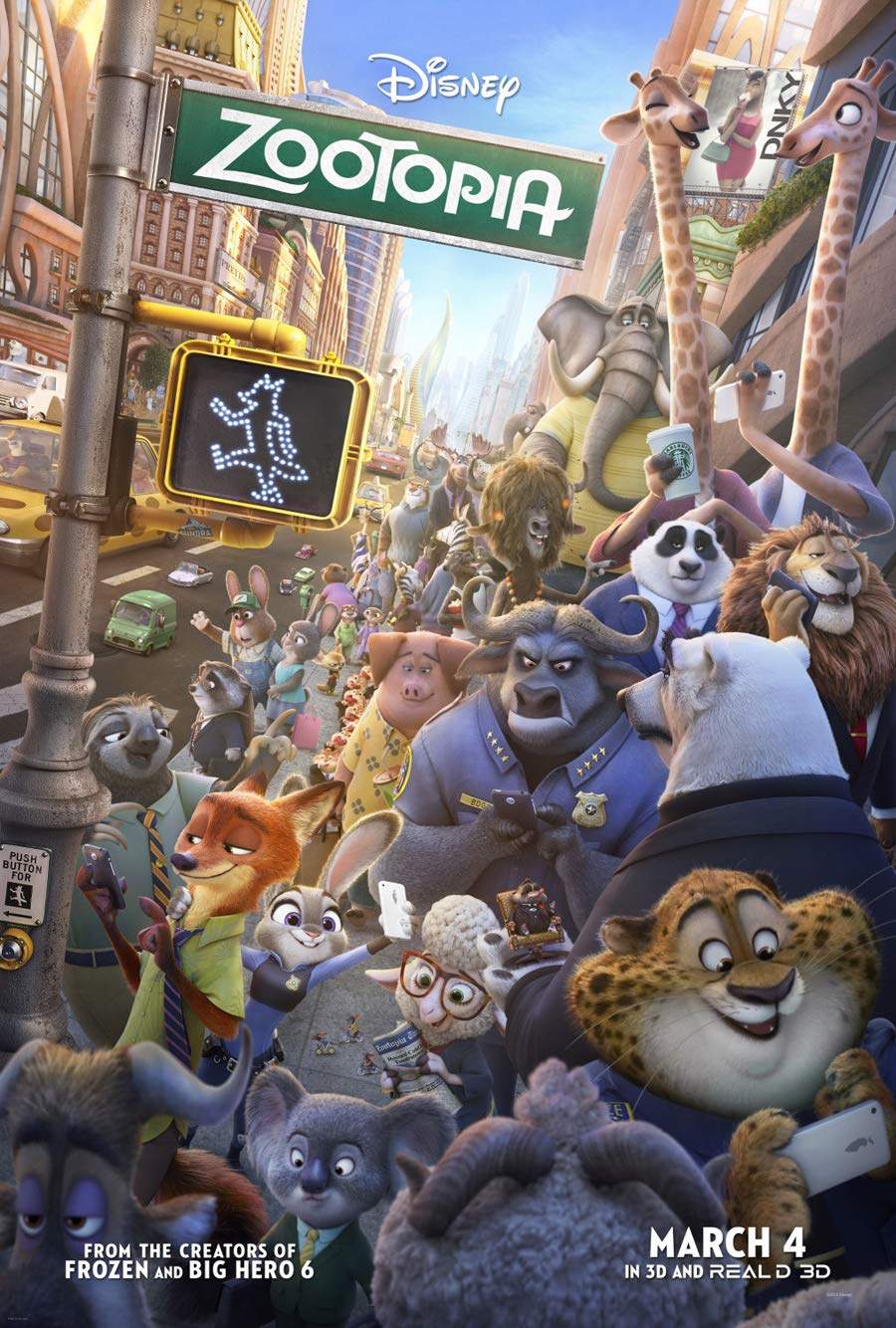
Zootopia
Family Movie Night
PROBLEMATIC TROPES TO UNPACK AS A FAMILY
Welcome to the Family Movie Night Series
STOP USING THIS AS YOUR ANTI-RACISM MOVIE
Zootopia
Screened with R2 (age 2) & Q (age 4)
Watch Zootopia (afflink)
Spoilers Ahead!
Content warning for animalistic racial coding, colorblind fallacy & a whole bunch of other bullshit
Family Discussion Questions for Zootopia
created by Kerry P. & Ashia R. for handouts at our local elementary school screening.
- After Hops’s TV interview, Hops and Wilde get into a fight.
How would you feel if you were Wilde? How would you feel if you were Hops?
Do you think you could forgive a friend for making you feel this way? Why, or why not? - Prejudice is an opinion, a pre-judgment or attitude about a group or its individual members.
Can we name 2-3 examples of prejudice from the movie? - Discrimination is behavior – treating people unequally because of their identity or membership to a group.
Can we name 2-3 examples of discrimination in the movie? - All of the predators who ‘go savage’ are voiced by Black or Latinx actors, and none of the main characters or producers or directors are people of color.
Why do you think the production team cast actors in this way?
Do you agree this was a good choice?
If not: How would you have changed the story?
Video Transcript
Hi guys!
So i’m trying something new i’m gonna do a video because frankly i’m getting tired of typing things and i thought this would be a fun interesting new way of doing things. try it out. see how it goes
um… there will be cussing. because in real life i cuss a lot and also i think i might need to make a transcription for this at some point but i don’t want to put this off forever, for ‘when i have time to make a transcription. i’m just going to do it now – and if anyone needs the transcription i can make it in the future.
So i’ve seen zootopia pop up everywhere recently.
let me hide myself that’s very distracting
anyway – so there’s a local group in the city that i live in that is doing anti-racism education and anti-racism discussions with their kids. it’s school-based, they’re focusing on watching zootopia as a learning tool for anti-racism education to get kids started talking about race.
our own school is also just doing a movie night – just as an entertainment thing. and the PTO reached out to me because we run a little anti-racism group within our elementary school. they reached out to me to come up with some questions to ask parents and kids for discussion topics after the movie and then i also saw their local library is also having a screening of zootopia.
So when i agreed to do these discussion questions, i was – okay great. i’m gonna watch this movie – maybe there’ll be a few problematic issues. but for the most part we’ll be able to come up with some talking points to get parents talking with kids and discussing race and bias and whatever is supposed to be in this movie.
so if you’ve seen this movie – it’s really cute. it’s adorable. It’s funny. the jokes are kind of amusing at an adult level.
but it’s also super duper duper problematic when you’re looking at this movie in terms of it being explicitly educational or even validating for people of color.
if you’ve been following me for a while you know that i categorize books into four different categories.
one of them is normalizing which should be the majority of the books that we’re reading. they should be the books that have a soccer player who’s dealing with going to the doctor, and he happens to be black. or a little girl who’s having trouble at school and she has a great teacher who happens to be asian. A person – they also happen to be a wheelchair user. these are wonderful normalizing books and there is zero reason not to have them.
but alas all white boys everywhere that’s why books for littles exists.
anyway the second category is explicitly educational – it’s the one where a boy is actively learning what it’s like to deal with mansplaining. or a white kid is reading about what it’s like to face racism. Or a natural born citizen is reading about the immigration experience coming into this country not knowing the language – that kind of thing that’s designed for the majority to understand the obstacles that minorities face.
then you have validating books – like spork, which as multi-racial person you grow up not really fitting in on one race or the other – you feel like you’re all alone. no one else has this feeling .and you read books like this and you’re like “oh god it’s not just me.”
it’s the kind of story that gives you language to describe how you’re feeling, and it helps you just kind of know that you’re not weird and you’re not alone. those kind of validating books are really helpful.
there’s a big group of books that are coming out lately on black hair and how black hair something to be proud of and the microaggressions and active aggressions that you face with black hair is something that a lot of people face. You’re not alone.
So – normalizing, explicitly educational, validating – and then the fourth one is problematic which a lot of people are like “we should not read these books. we should burn these books. we should get rid of these books.”
you know like, everyone stopped reading dr seuss. but the thing is these are the best learning and educational tools if they’re in the right hands
so you want to hold on to those problematic books. you want to see these problematic movies because they open up discussion on how embedded white supremacy is, how embedded this network of things that we call the kyriarchy – the patriarchy and white supremacy and ableism – all this stuff – how it links together. how that is embedded in things and how is that considered normal and okay.
Back to zootopia – lately people are talking about this as an explicitly educational, or even validating story – but it’s not. it’s a problematic story and we should approach it from that lens.
it’s wonderful ridiculous movie that is funny to laugh at with cute animals – that’s also fine. but we need to understand the problematic themes in it so we can draw our kids attention to it and don’t let that become an implicit understanding of what reality should be like.
or let that that become the message. This is not a message we should passively accept. it should be something we’re discussing – fighting.
so here’s a little history – i’m sure a lot of you are familiar with this – but to get into the movie and the themes in the movie, we need to discuss aspects of our history
there’s racial coding
there’s the vocabulary that they’re using against what we’re perceiving to be ‘dangerous black man’ aka ‘the predators‘
there’s the issue of whitewashing in hollywood
and there’s also the deleted scene.
so let’s go through these one by one
in racial coding, you consider people of color as animalisti.c and if you really think about it, you don’t realize there’s not this one animal that people tend to think of when they think of white people. because white people are diverse and all different and they’re not a monolith.
But somehow for people of color, it’s always a freaking chinese panda, or it’s a black monkey. and from the very first American cartoons and the first books that we ever had – people of color have been coded as these racial animals.
And it’s considered okay because white folks are like “i don’t know why you’re reading race into this. this is clearly just a jive-talking crow in [Dumbo]. and just it’s voiced by white people so it’s okay!”
so from jive-talking crows to chinese pandas in zen shorts
(i’ve got notes that’s why i keep glancing away to)
having a movie like kung fu panda – which by the way is mostly white leads, just a huge missed opportunity.
And then you’ve got, disney saying “you know what let’s do hamlet in africa – but we want white people to show up and we don’t want to scare them away so let’s just make them lions. and let’s also make the main characters white. but the supporting characters and the bad guys they can be black. that’s okay.”
Very specifically we’re mostly going to talk about how black people are coded racially as monkeys and gorillas and basically these aggressive primitive creatures feeds into this trope of the ‘scary black man’ = the brute, the criminal, the thug – all of these words that we use – especially liberal people like me could use and argue “we’re not being racist. we’re just using the word ‘thug’”
but that really does mean black people. it’s racial coded word.
so there’s also some things we could touch on in terms of the ineffective smart geeky / wise mystic asian. and also the invisible and harmless southeast, middle-east, and pacific islander who don’t really exist in movies like this except for moana and lilo and stitch.
because pacific islanders are traditionally a ‘safe’ and ‘harmless’ way to promote diversity without addressing the issue of white colonizers on their islands.
those are good movies but it’s interesting to see how people approach these different conversations from an animal versus a human standpoint.
so from the vocabulary of a dangerous violent and dangerous black man – there’s a history behind that clearly. there’s hillary clinton’s ‘super predators’ which was just her way of saying ‘black kids.’ where ‘gang’ equals ‘black or latinx’ kids
and you have to think about the fact that she wouldn’t have talked about white kids this way. no one ever calls white kids a gang. you just call them like…troubled youths or something.
as a direct quote on the history of the word ‘predator’ and how it relates to children, specifically male youths color – hillary’s clinton’s quote “they’re often connected to big drug cartels. they’re not just gangs of kids anymore, they’re often the kinds of kids that are called super predators. no conscience. No empathy. we can talk about why they ended up that way, but first we have to bring them to heel.”
which is just a nice way – actually a really terrifying way of saying we need to put black kids in their place.
so that’s our history of super predators.
the history of the heroin epidemic also kind of plays into this not. While none of this was intentional on the makers’ part – it speaks to the ignorance of what happens when you have a primary group of white men who get together and talk about race. but they don’t know the history and what they’re feeding into when they make a movie just like, stumbling ignorantly through things.
so the history of the heroin epidemic is it’s a tool to keep lower income people and black populations in their place. there’s allegories of the CIA introduction of heroin to create the crack epidemic and the myth of the welfare queen – which depending on whether or not you consider it a conspiracy theory – it’s hard to ignore how that plays into this movie’s conspiracy of this sheep who is trying to keep down predators and put them back in their place through the use of drugs.
This movie suggests that white supremacy is intentional, rather than unintentional, and that unintentional racism is somehow less harmful.
that’s not true. unintentional racism is just as harmful – if not more harmful – because you can gaslight people and say that you’re not actually trying to do anything against them.
the movie suggests that eliminating racism is as simple as not being actively evil and overtly just discriminatory and that’s not the way it works.
to eliminate racism, to eliminate discrimination, we can’t just sit passively by and try to be good people. we have to actually fight and dismantle things because you can’t dismantle something if you refuse to see it.
anyway so this story implies racism is caused by just a few bad apples. you know, you’re like “i’m not a bad guy. i’m not a white supremacist” and it’s really easy to just dismiss all the things – like not hiring people of color in your company.
but racism is actually a system that was built on the foundations of exploitation and oppression – such as slavery and our school-to-prison pipeline that currently funds our economic system.
so it’s really harmful to teach this kids, and to give ourselves paths on the back for watching movies like this when it actively teaches us the opposite of the things that we really need to know.
so the third thing on the history is whitewashing in casting. i’m not sure if you guys are following this but as an asian person this is something know comes up a lot we have to disambiguate whitewashing vs missed opportunities. Uh, both of them are whitewashing, but there’s active whitewashing – like we’ve seen in the movie
washing we have the movie annihilation – which is either out or coming out soon. you have indigenous women and asian women – these roles originally meant women of color, cast by white ladies. that’s white washing.
then you also have movies like ghost in the shell’ where, like you have my racist cousin who chimes in to say “well you know that character technically can take any body, in any race, so it’s okay that they cast a white woman”
but the story was originated in asia. it features asian characters. and if you can cast ANY race of an actress for that role – why not cast an asian woman? why not cast a middle eastern woman? why not cast a pacific islander?
why did she have to be freaking white?
so missed opportunity and all these issues.
People like Anna May Wong a long time ago, and chloe bennett today are still fighting white washing of asians in most media particularly u.s american media.
a lot of people have to drop the wong off their names or they have to play to stereotypes and take these really kind of shameful harmful roles that do active damage to stereotypes in order to gain enough career and enough clout and enough power to eventually take roles that aren’t about their race or that portray us in a role of integrity where we’re not just erased from the planet.
so ignoring that – zootopia is a story about white and black folks because, everyone else doesn’t exist racially coded white and racially coded black folks.
i’d to also point out that both main characters are white. and i checked out imdb and this is not going to be a perfect stat because i can’t actually check the family history of every single cast member but 8 out of 55 people in this cast are people of color.
the only somewhat main character is the chief if you can even count him as a main character at all because he really doesn’t have much power, he’s kind of ineffective and ignorant, and clearly he was thrown in as a token.
so all the directors ,all the producers, the casting department, all the art direction – white men with the exception of one white woman producer. 1 out of 8 writers is a woman of color. the rest of them are white men.
josie trinidad who is filipina – wait there’s another white woman in there, but here’s the issue –
so if you have one filipina woman in a sea of whiteness – and assuming you can look at her as a monolithic person who can speak for all people of color – which clearly you cannot. no one can.
you have to think like, “if i was that lady, i would not feel comfortable.” and “i would also not have the energy to educate this sea of directors, producers, screenwriters on the many many issues that they are coming up with and i would not really have a place to check them on that and ask them to just stop”
it’s unreasonable for us to expect that one filipino woman out of this huge pile of white dudes and occasional white ladies is enough to check that privilege – assuming she would even be aware of it.
because you know not all of us face the same microaggressions, not all of us have the same lived experience.i would also to point out that the animation crew aka the cogs without power who are busy rendering animal hair and backgrounds and have no power or say over the script – are almost exclusively people of color.
so it’s interesting to see how we stand on the backs of those people. pay them hopefully what i would hope is a living wage – but the people who are making millions of dollars off this movie are white.
anyway more history to this is the deleted scene – so there’s a scene called ‘the taming party’ originally put in this movie. they had to get rid of it because it was really freaking dark. there is a scene where a child predator is… kind of a bar mitzvah scene where there’s a big party, and it’s called a taming party.
the kid gets a shock collar ,and every time they do something like getting too excited or, too ‘predatory’ or even, i don’t know laugh at balloons or something, they get shocked.
so what this scene tells us is that it’s still an inner predator. as we’ll see later on – predators are coded as people of color in this movie.
So we’re teaching kids it’s in a person of color’s nature to be violent and aggressive and it’s only with significant outside moderation – literal shackles in this case, that makes them civilized aka ‘act white’
so it creates the illusion of a ‘before’ when predators (aka people of color) were actually dangerous, but that’s never been true –
people of color have throughout history been primarily victims of systems and all of these ideas of the super predators and the scary black man are all founded on white fear, misinformation, and just nonsense.
so i need you to remember this for later because this is also an important point – only predators needed to change to reach this present-day utopia that the movie takes place in. that’s an important point .
Anyway let’s just discuss the vocabulary of this movie
predator we discussed earlier, but something to keep in mind is – only the predators are the ones that ‘go savage.’ and only the ones that go savage are voiced by black or rather not only, but all of the predators who go savage are voiced by traditionally black and latinx voices.
so that’s a weird message to send kids isn’t it? Odd!
there’s also the phrase ‘gone savage’ which is coded language to represent indigenous people and enslaved africans to imply a lack of empathy, inability to feel pain, and justification – basically to treat them as. they’re savages.
No one has ever called a white dude a savage. it just doesn’t happen. then there’s also the issue of the word ‘primitive’ which is just a fetishized and backward person. they return their natural state and their base and primitive is always …
even my friend who camps outside half the year and shits in the woods – he’s not called primitive because he’s white.
‘civilized’ meaning in this movie and pretty much in pop culture means w’hite westernized northern urban and u.s based’ more or less
and then this is aside from the racial tones of the movie, but the term ‘stupid’ ‘dumb’ and ‘crazy’ as a pejorative- which i know are common – these repeated pejoratives against those with mental health issues, intellectual, and verbal disabilities – they’re just unnecessary. why is that the thing that we use to rip people down?
okay so only the people of color, aka the predators, are ever called primitive – ever expected to be savage in a natural state.
zootopia is an allegory for race, and a lot of people trying to argue this, saying we’re reading too much into it. but the problem is that not only are we using it for racial education, and that’s my main concern here – but also if you look at the history of the movie – the makers say they didn’t intend to make this about race but then they kind of decided to hop on the pop culture train and kind of cash in on this current wave of civil rights.
but they totally half-assed it. so we’ve confirmed – and since then, the makers and screenwriters have confirmed that it is about complicit bias and racial discrimination.
they genuinely think that they’re doing a good thing that they’re somehow educating us on something and… no one is walking out of this movie, no white person particularly is walking out of this movie thinking “wow i have some work to do i have to rethink some things”
No!
every single white person who walks out of this movie is thinking “good! racism is bad i’m good,i can just show this this to movie to my kids and i don’t have to discuss race with them. How good, now my kids know that racism is bad.”
anyway so as an educational resource, it needs to be problematic – it can’t be validating. as an entertainment resource just – whatever.
so the mixed messages that this movie is sending – and this is the most dangerous part – is that on the surface they’re saying stereotypes and implicit bias are not okay. it’s bad to have bias against weak bunnies (who are literally weaker). it is bad to refuse ice cream to a predator – because that’s discrimination – but then there’s an overwhelming number of examples of when it’s okay to stereotype.
for example fat shaming – totally okay to have some laughs at the expense of fat folks. you’ve got a fat cheetah. he’s lazy he’s gluttonous, he’s not really paying attention to doing his job.
you’ve got the redneck bully in the very beginning scenes where he’s violent and and he speaks with the southern drawl.
and then you’ve got this barely-restrained black i’m sorry i mean “predator” fennec fox ‘Finnick’ – and also you have all of the animals that ‘go savage’
So black people are basically ‘barely controlled’ and i don’t even know how they control themselves but somehow they manage to not kill us and eat us! anyway
then you’ve also got some asian mystics – tommy chong and gita redy played the elephant and the yak – both literally closed off from the rest of the movie, and the rest of civilization. separated from the rest of the world doing yoga and stuff – which is just… seriously?!
then you’ve also got poor folks who are low-level criminals such as the weasel with a brooklyn accent wearing a wife beater. and then all italian are jersey-shore / organized crime cast.
basically all of this separates it into an ‘us’ – meaning the people whose lens we’re seeing the movie through, the white coced bunny
and ‘them’ meaning the predators and the weirdos who do yoga.
then we have you know white ‘people of color’ and we see all of this through the lens of this bunny – which if you back up – is through the lens of these white directors, white casting people, and white producers.
so the main takeaway from the story – that i’m really terrified that people are going to get i- s that our bias is justified.
and that even though they say microaggressions are ‘not okay’ such as ‘only bunnies can call themselves cute’ – or ‘don’t touch a sheep’s hair.’
or ‘it’s not okay to refuse service to a predator’ they actually do say it IS okay and that bias is founded in fact. which it’s not.
that just doesn’t make any sense. so they’re saying it’s okay to stereotype because stereotypes are based on biological fact in the instance of this movie.
because they’ve coded us all as animals yeah they are based on biological fact – but since they’re trying to teach that as a learning education tool it’s not based on fact because race is a construct. There is no biological thing that makes black men scary.
it’s just complete social nonsense. so you see the stereotypes that i already mentioned but also all sloths are slow, because they literally are slow!
all foxes are sly – okay
the money has this part where she thinks the fox might be sly and then she feels bad about being discriminatory. but then he actually IS sly. he’s literally a conman!
bunnies really do multiply
Weasels really do cheat in this movie and predators really can go savage with just one tiny pill
so also can i also mention predators really DO eat prey. so when you see this scene of a… i don’t know a tiger or something -he sits down in a train next to a deer and the deep m oves her daughter away from him.
now, when a muslim sits down next to a white christian lady and the lady moves her daughter away – that white lady is operating on myths and untruths and also she’s being racist/islamaphobic.
But when a tiger sits down next to a deer – a tiger’s grandfather literally did eat that lady’s grandfather! so i think she’s kind of justified in moving away.
this is an issue. so real stereotypes are not based on biological fact and this movie is implying that they are.
second point this movie confuses prejudice and racism. racism is power plus prejudice and this movie just completely removes the idea of systemic power. They send the message that we’re all prejudiced which is true- except we can’t actually all be racist.
Racism is a systemic issue – not just a collection of people bouncing around with their own individual biases. it’s about power.
so you have to wonder like – in this movie, who has the power? and they make it super confusing.
the argument for predators being in power are – the sheep who saddles up to the bunny and she says “you know, we little guys have to look out for each other and stick together” and you see multiple scenes in this story where bunnies and sheep have to work three times harder to get to the same position as the predators or the larger animals.
which is true of people of color, of women, but the thing is that this movie kind of flips it upside down because they also point out a bunch of microaggressions where the prey are in power.
so at the same time – within minutes of the sheep coming out and saying we are the majority and the prey are the majority, you’ve also got the fox feeling entitled to touch the sheep’s hair.
so who…? they’re mixing up that power dynamic of entitlement
and then you’ve also got the token idris elba voicing the chief, and you’ve also got the token lion mayor who’s voiced by a white man but they’re kind of coding him as black.
this is kind of like the fox in the hen house issue – where people who are against obama would think that he was throwing white people under the bus to help black people. now you have that same exact theme in this movie where the mayor is literally endangering the rest of the population so that way he can squash any discrimination against predators.
oh it makes me tired.
okay so because these black-coded characters – the chief and the mayor are token people of powet, they’re trying to use it as an argument against saying that people of color, or predators, as a general rule, lack power.
which is a really great way to reinforce white supremacy, tokenism
basicallyin the movie prey are normalized. the predators were the ones who had to contort themselves and change in order to fit into this utopia.
so let’s just move forward understanding that the prey are basically coded white people. predators are coded people of color.
Prey can refuse service to predators. there are stereotypes that cause predators to lose their jobs ,face microaggressions, have less opportunities – i think that kind of makes sense except for all the confusion.
predators are the ones who are forced to assimilate but then you have the issue where the bunny saying the predator can’t ‘call her cute’ only SHE can call herself cute – which gives us the idea that racism affects all people equally and it doesn’t.
predators not being allowed to call a bunny cute is not the same thing as white people not being allowed to use the n-word or women not wanting people to call them girls. just because we don’t want to be associated with being immature and ignorant as a woman or just because black people don’t want you to use words of oppression from back when it was normal and okay to lynch and murder them – it’s not exactly the same thing
bunnies literally are cute. and also there’s not a history of lynching, murder, lost employment and housing and rape tied to the word ‘cute.’
it erases the power from the situation where they they kind of muddle up this idea of who is oppressing who, and it reinforces this concept of colorblind fallacy where (usually it’s white people) who say “oh i don’t see color. my children love everybody equally.”
but the problem is there IS color and there is (the social construct of) race – and there is discrimination against people of color. so if you’re going to be willfully oblivious of this, you’re willfully oblivious to systemic discrimination that affects people of color and you can’t dismantle what you refuse to see .
so the story focuses from the white gaze, and that’s natural because all the people who made the story are white.
through the lens of the prey, judy the bunny – we see this utopia which is only achieved when the predators ‘behave.’ when they renounce what defines them as predators – literally they eat prey! and when they act like prey, they obtain zootopia.
this wonderful utopian city is only achieved when black folks ‘behave’ – renounce what defines them as black folks, act like white people.
which is literally what we’re constantly telling black people to do
and you know it’s worked really well for us asians (/sarcasm). we just act white and as long as we act white we stay in our lane, we stay you know, assimilated – they won’t hurt us.
but as soon as we stop acting white we get in trouble. we get killed by cops, and everyone just kind of ignores that because “those are the bad people of color”
so what we want to come across – what we want to gain from this – is asking our kids ‘what does it mean when a group of white people write a movie about race through the lens of their ideal white utopia?’
coding themselves as harmless prey, and people of color as easily triggered predators?
and then by refusing to address the systemic component of racism – it’s a huge missed opportunity to make this a learning tool.
they call it a learning tool and it’s actually a circle jerk of performative fake anti-racism education and it shows exactly how embedded white supremacy is in every single thing that we feed our kids.
so that is my rant on zootopia those are most of the things that i think i had to say and i appreciate you for listening
i hope to do something weird whether it’s writing or some kind of recording interpretive (dance i won’t do that) once a month as just a general patreon perk so we have something that isn’t necessarily about books so that way i’m not keeping content from people – but i’ll see you guys get a bonus. Think of it as nn experimental lab of fun things.
so let me know what you guys think. i appreciate you and i super like you guys!
How we calculate the overall awesomeness score of kids media.
JOIN THE CONVERSATION & SHARE YOUR TAKE
How did you unpack
this movie with your kids?
This page may use affiliate referral links. We may earn a small commission if you choose to make an order using these links.
Learn how we use affiliate links to support our community.
©2014-2026 Ashia Ray of Raising Luminaries™. All rights reserved.
Raising Luminaries is anchored in the land of the Wampanoag & Massachusett People.
Support Wôpanâak early childhood education here.
Photographs via Unsplash & Illustrations via Storyset, used with permission.