LEGACY LIBRARY
Get Free Social Justice Toolkits For Kids
Picture book | Not Recommended
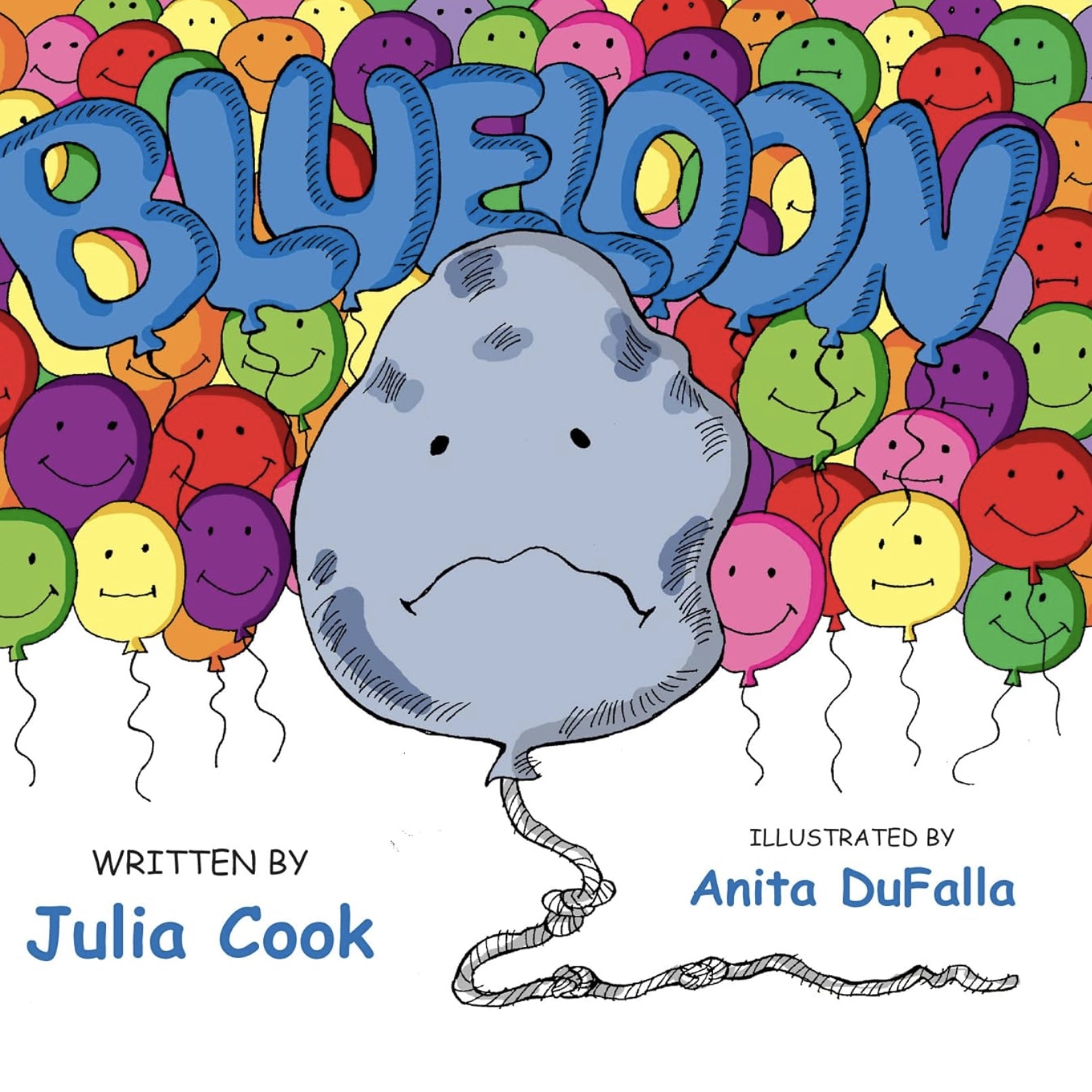
Written by Julia Cook
Illustrated by Anita DuFalla
Reviewed by Ashia R.
Need help starting hard conversations with your kids?
Get stories, tips, and tools to ignite the next generation of kind & courageous leaders.
Learn how we calculate the overall awesomeness score of books.
I started researching mad rights a few years ago and want to approach this topic slowly. Sanism is such an acceptable form of oppression and like everybody, I’ve got a lot of learned bias and internalized ableism to work through myself.
I mean – it’s been years since I learned how terms like ‘crazy‘ and ‘bonkers‘ stigmatize and harm people with mental health conditions, but I still have to bite back my words and pause to search for alternatives in my everyday language.
So this weekend, we were talking about Nana Banana, my maternal grandmother. And R2 made a good point – Why do we call her ‘Nana Banana?’
I always tell myself it’s because ‘banana’ rhymes with ‘Nana,’ BUT. I didn’t want to admit it, but there’s an underlying story about why my aunts really call her ‘Bananas‘ – and that’s because they’re poking fun at her mental health. My family justifies making fun of her conditions because they (we, I am complicit in this too,) feel we’ve earned the right as a form of survival humor.
So we discussed this with the kids – how it’s okay not to like Nana. Her mental health conditions aside, she’s a vicious, abusive racist and once set fire to a house with her sleeping children inside. We refuse to excuse her actions.
But it’s also not okay to make fun of her because of her mental health conditions. AND it’s okay to understand how those two things are intertwined at the same time that we understand that many people with those same conditions don’t do shit like volunteer at shelters so they can steal shit …FROM UNHOUSED PEOPLE.
(Nana is really fucking evil.)
So it’s our job as parents to talk about mental health conditions – and how Nana’s conditions can’t be fully separated from her actions – BUT how it’s not her mental conditions that make her do shitty things – any more than her race, gender, class, etc.
It helps that we have other family members with similar conditions who have never tried to set anyone on fire. And we’re trying to supplement that with destigmatizing books about kids with mental health conditions (there are not many!) Because I’m not about to poke all of our friends and be like “So, you seem a little depressed to me. Are you ‘officially’ depressed? Can we use you as our token crazy friend to teach our kids about sanism?” (Please don’t do that!)
Our mental conditions play a role in our choices and our identity, and these choices can inform how we grow through the world – but our choices are our own. And when we tie together my mental disorders and conditions with the things I’m shitty at, that reduces my humanity into a diagnosis. It just doesn’t work that way – and also that SUCKS.
Similarly, if we poke fun at ‘Nana’ with easy-breezy sanism of ‘bananas,’ that harms all people who share her conditions, including the ones who would never do the horrible things she’s done.
Ditto that point for folks who armchair diagnose 45 or call for a mental health screening for future candidates. We can hate that dude and his ignorant pustule dumpster actions, but we’re not gonna tear down everyone with mental health conditions just to paint him as the inferior ‘other.’ I’ve lost and blocked colleagues over that bullshit. Don’t.
Watch the video below unpacking the sanist bullshit in Blueloon, another sloppy mess of childism, opportunism, and utter ignorance by Julia Cook.
Our super awesome volunteer coordinator Darian P. made captions!
Hello friends.
Today, we’re looking at another problematic book: Blueloon by Julia Cook.
If you’ve read my post and collection about talking to kids about shootings, you may have seen some rants I’ve done against Julia Cook’s books. This is a case of really great intentions, and filling a gap in what we need in children’s literature, but done extremely poorly.
If you’re familiar with Julia Cook, you might have seen her books boosted on Amazon and places like that. She churns out oodles and oodles of books without fully doing the research. I think she connects with one professional, throws out a book, and then doesn’t really refine it, test it with kids, or think about the implications of feeding into stereotypes. Her books are intensely sloppy. The sloppiest books I have ever seen.
There’s no quality control. It’s about quantity and people assuming that as long as a children’s book is about a topic, it must be a good thing. But it’s an example of childism and ageism: assuming kids will accept and deserve lower-quality literature. It’s basically giving them junk, like Happy Meal toys, and expecting that to do the job.
Today we’re looking at Blueloon, which is about bipolar disorder. Actually, it never really says that it’s about bipolar disorder. I’m just assuming, because she’s too lazy to address what they’re actually talking about.
So this balloon is sad and mopey. Imagine giving this to your kid who has bipolar disorder and saying, “Hey buddy, this is you.” The imagery is a little messed up. In other books she’s put people’s parents in a wood chipper without thinking about it at all.
The book begins:
“I’m supposed to be a regular balloon, but I’m just not having fun like the others. I’m kind of dull. I’m kind of flat. My string is tied up in knots.”
Identifying as dull or flat, rather than “I’m feeling something,” is a problem. A lot of people argue that children’s books should focus on human protagonists so kids can see themselves reflected instead of doing the mental gymnastics of translating metaphors like “this balloon represents a human.”
This is a good example of why we should be using human protagonists. Couching bipolar disorder in a balloon metaphor implies there’s a stigma that’s too heavy for kids to see directly. It implies that showing a human with bipolar disorder would be shameful.
So kids have to translate: balloon, up and down, knots in the string. It forces unnecessary mental gymnastics. It’s ableist for literal-thinking kids who can’t easily make metaphor connections. It’s also shame-based and stigmatizing.
The balloon talks about how it used to feel bright and happy. But if you’ve ever had a depressive episode or severe anxiety, that’s not always how it works. When you’re in that state, you’re not usually reflecting clearly on how things used to be. Your perception is distorted.
It’s more like: “I feel terrible now, and things have always been terrible. Maybe I just didn’t realize it.” One of the most dangerous parts of depression is the feeling that you are stuck and will always be stuck.
Which makes me wonder: did the author actually speak to anyone who has had these experiences?
I should point out that I am not bipolar. I probably miss things from an own-voices perspective. I do have OCPD (which is not OCD) and anxiety. I’ve also followed some of the Mad Rights movement, which focuses on accepting how you are rather than seeing yourself as broken.
But this book presents a broken balloon. It feeds the narrative that people with mental health conditions are lesser and must work toward a magical cure by the end of the book. If you don’t get there, you’re failing.
So what happens when the only book a kid can find about bipolar disorder is this? Instead of a message like: “You’re okay the way you are. Let’s work with what you have and find tools that help.”
Instead, the story shows a sad balloon surrounded by perfect balloons. The sad balloon wants to be like them because of ableism.
Then the book describes manic episodes using phrases like “crazy days.” This kind of language stigmatizes mental illness and uses “crazy” as a pejorative. Why not just call it a manic episode?
The author tiptoes around the terminology because words like “manic” feel stigmatized. But avoiding the real terms just adds confusion.
Later there’s a microaggression: someone tells the balloon to “snap out of it.” The book tries to be validating but doesn’t go far enough to explain why comments like that are harmful.
Then a “wise rock” psychologist appears. The metaphors become ridiculous. The rock repeatedly tells the balloon it looks terrible.
At one point the rock says:
“I understand why you’re depressed and why you feel so sad. Just hide under me for a little while and then you won’t feel so bad.”
So the therapist’s advice is essentially: hide under a rock for 15 minutes.
What happens if a child tries that and doesn’t feel better? The book implies that it should work. If it doesn’t, kids may feel even more broken.
After fifteen minutes the rock ejects the balloon and tells it it can’t stay there anymore. Maybe this is supposed to represent cognitive behavioral therapy, but it’s unclear.
The rock then says:
“You can start by deciding that you want to change.”
This feeds into the narrative that if you’re depressed or disabled, you’re simply not trying hard enough. The same logic people use when they say infertile people “don’t want a baby badly enough,” or someone with depression just needs to pray harder.
The advice is vague platitudes: believe in yourself, be yourself. But what do those actually mean? There are no concrete examples.
When people are depressed, their cognitive processing and creativity often drop. Expecting them to interpret vague metaphors and turn them into action steps is unrealistic.
The balloon then goes to a doctor who prescribes “fresh air.” Again, medication is hidden behind metaphor because the idea of taking medication is treated as shameful.
Why not just say the balloon is taking medication for its health?
Later the rock comments that the balloon looks better because it no longer has dents. The focus becomes appearance: if you look okay, you must be okay. That reinforces the stigma around people who mask depression.
The rock then suggests writing down everything that makes you sad and everything that has messed up your life. This implies depression always comes from external events, which isn’t accurate.
Then the book introduces yet another metaphor: a pie chart representing executive functioning. At this point there are so many metaphors that it becomes confusing and incoherent.
The book suggests exercising but gives no practical guidance on how to start. It’s just a list of things to do. Then suddenly the balloon is better.
The message becomes: if these tools don’t work for you, it’s because you didn’t want it badly enough.
And of course the story ends with a magical cure. Because apparently we can’t accept that sometimes these conditions persist and people simply keep living their lives with them.
So that is an example of a Julia Cook book.
Sloppy.
Insulting.
And very poorly done.
That was my rant about Blueloon.
A monthly Julia Cook garbage fire cluttering bookshelves – spreading harmful assumptions and reinforcing negative bias against targeted people?
Or one spectacular life-changing Rukhsana Khan gift to the world every five years or so?
More and more, I’m starting to see how my complicity in the attention economy (particularly on social media) harms our community and keeps us from doing good and dangerous work.
Anyhoo – I’ll be back with updates on the #FamilySummer4BlackLives Action in a couple weeks. Stay tuned!
With you,
Ashia
Because the publisher repeatedly tried to weaponize false copyright infringement claims to get this review taken down, a quick reminder about the Fair Use Act:
Fair Use Act – 17 U.S.C. § 107, Notwithstanding the provisions of sections 106 and 106A, the fair use of a copyrighted work, including such use by reproduction in copies or phonorecords or by any other means specified by that section, for purposes such as criticism, comment, news reporting, teaching (including multiple copies for classroom use), scholarship, or research, is not an infringement of copyright. Copyright information All material is owned by the creators (authors, illustrators, publishers) displayed or mentioned in this video. Reading this storybook was done under the Fair Use of a copyrighted work for teaching literature analysis and criticism.
FFS.
Raising Luminaries may earn a small commission if you choose to make an order using these affiliate links.
Learn how we use affiliate links to support our community.
Ashia Ray is the founder of Raising Luminaries.
I’m Autistic, multiracial (Chinese/Irish) 2nd-generation settler raising two children alongside my partner on the homelands of the Wampanoag and Massachusett people. I support families and educators in raising the next generation of kind & courageous leaders, so we can all smash the kyriarchy together.
Let's Connect
FREE STUFF
JOIN OUR COMMUNITY
SHOP
Posts may contain affiliate links and sponsorships, which allow me to earn a commission at no extra cost to you.
PARTNERS IN CAHOOTS
TOPICS
CONTACT
About
Raising Luminaries shares kid-centered social justice toolkits to save you time and stress. We provide step-by-step support for kyriarchy-smashing caregivers juggling parenting and advocacy without burning out.
ABOUT | MISSION | FINANCIALS | ACCOUNTABILITY
You’re welcome to share & boost this toolkit, with attribution to Raising Luminaries.
Land acknowledgements are worthless without action. So we prioritize amplifying Indigenous-lead resources in our toolkits and reciprocate annual donations to our local Wôpanaâk Language school.
This website may use affiliate referral links. I may earn a small commission if you choose to make an order using these links. Learn how Raising Luminaries uses affiliate links to support our community.
Photographs via Unsplash & Illustrations via Storyset, used with permission.
©2014-2026 Ashia Ray of Raising Luminaries™. All rights reserved.
This website uses cookies to improve your experience. We'll assume you're ok with this, but you can opt-out if you wish. Accept Read More
