Good to know about this unpolished book list
- I got 25% of the way through creating this booklist back in…I dunno, 2018? And then got overwhelmed with other life stuff. So it’s going to live here half-baked for now until I can get back to it.
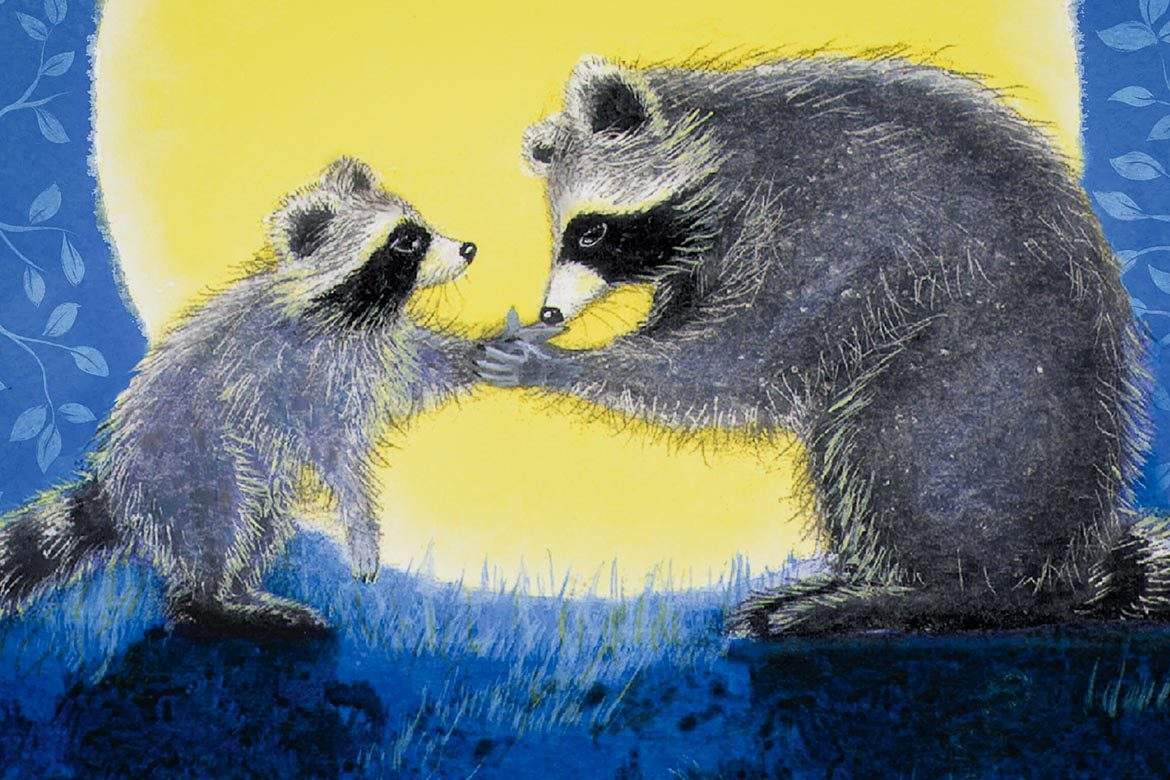
[Image Descriptions: Cover of The Kissing Hand, by Audrey Penn, Ruth E. Harper & Nancy M. Leak.]
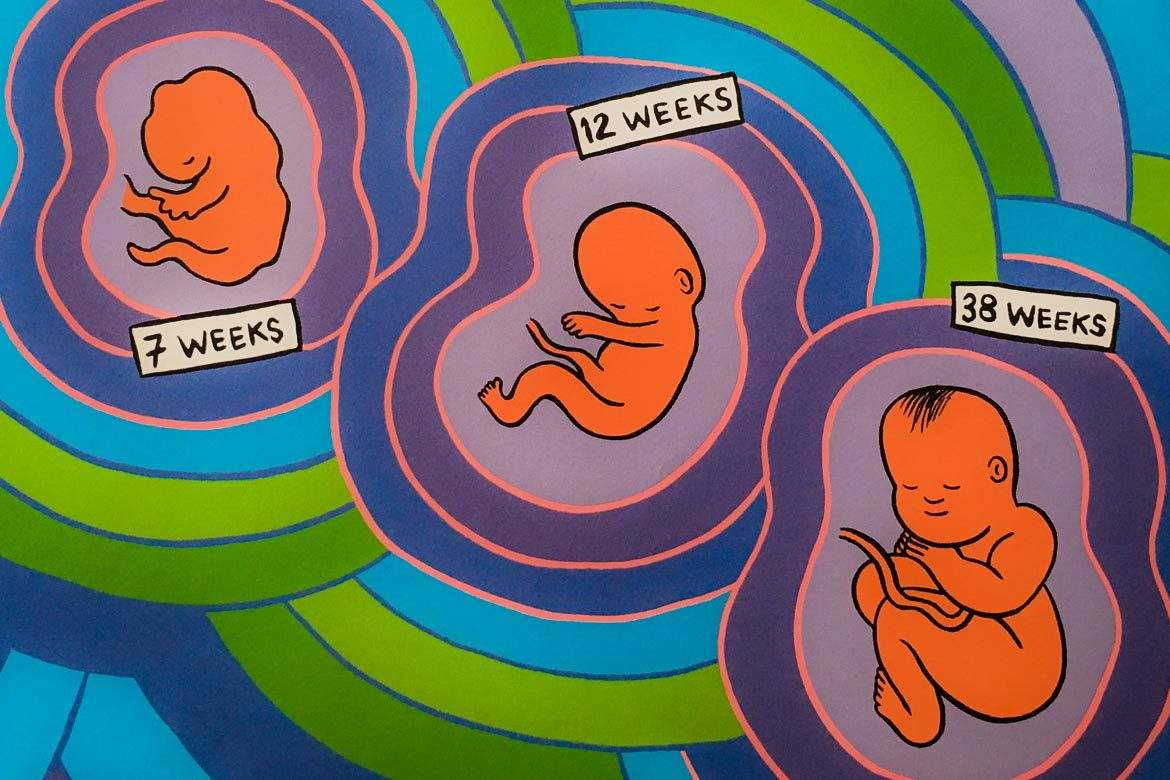
[Image description: Illustration from What Makes A Baby, by Cory Silverberg & Fiona Smyth. A developing fetus at 7, 12, and 38 weeks gestation.]
Not sure how to explain where babies come from? If you’re looking for inclusive, age-appropriate books to talk about reproduction that include all family constellations, these are the ones you’re searching for.
Raising Luminaries is free and accessible for readers who can’t afford a paywall. Posts may contain affiliate links, which allow me to earn a commission at no extra cost to you. Check out the full affiliate disclosure along with my statement of accountability.
Oh, hello there, Squeamish Parent!
If you are choosing to wait until your kids hit puberty to discuss sex with your kids, that’s cool.
For our family, it’s easier to discuss the internal mechanics right now. It was easier to answer my sons’ questions about lumpy, oddly-behaving body parts and calm fears about ‘getting accidentally pregnant.’
When our eldest was around 20 months old, we stated preparing him for the birth of his little brother. We watched youtube home-births, looked at images of fetuses as his brother grew, talked what it was like when he was in my tummy (and the years of medical intervention it took to get him there).
We discussed how some kids live in tummies of surrogates, first parents, trans dads, and the how all families are real families.
At one-and-a-half, he was old enough to understand human reproduction, without any of the awkwardness that comes from discussing sex with an older child.
I was surprised how easy it is to talk about sex, when we start from a framework of healthy human biology. But it was still hard to find books on this topic for kids this young. (Which is ridiculous – why wait until our kids have started having unsafe sex or being molested to finally teach them about it!?)
Most books were too complex, skirted around sex unnecessarily, and created the illusion that our cishet, two-parent family was the only way families were built. I want my kids to understand that there are many different types of family constellations.
The ways we build our families are diverse, unique, and can be a bittersweet mix of trial and hope that passes beyond biology.
We teach the Earthquakes to challenge us if we try to use our parental authority as a shortcut – to never accept ‘Because I said so‘ as a final answer. We answer with unvarnished truth when they ask us hard questions about death, injustice, and sex, even when they’re little – so they can trust me in ten years, when our relationship gets shakier.
Pick the right book for your level of squeamishness below. No judgement – everyone takes on what we can handle, and sometimes our own history with sex can make this a really scary conversation. If you’re not ready for these books yet, check out our basic books on anatomy and body awareness, then come back here.
Raising Luminaries is free and accessible for readers who can’t afford a paywall. Posts may contain affiliate links, which allow me to earn a commission at no extra cost to you. Check out the full affiliate disclosure along with my statement of accountability. If you’re into supporting libraries (please do!) more than consumerism, you can also support my work directly:
Donate or shop using an affiliate link via| Paypal | Venmo | Ko-fi | Buy a t-shirt | Buy a book
The Little Earthquakes’ Top Pick (with reservations.) Ages 1+
While pregnant with R2, Q and I used to pore over the images of Being Born in concert with R2’s development. Being able to ‘see’ his brother’s development beyond grainy ultrasound images (which meant nothing to him) allowed Q to start bonding with R2 and gave him extra time to identify us parents as a shared resource.
This is our favorite because it features the most realistic images (photographs) and straightforward language to give kids a sense of what a developing embryo and fetus looks like. Both my kids LOVE it and ask for it regularly.
But it’s not representative of all family constellations, presuming the reader is the biological, naturally conceived child of a cishet couple. You can skip over the text and just follow the amazing images, but be prepared to clarify this isn’t the way all babies are made.
Specifically, it was just this one line: “Your father’s penis became hard so that it could slip into your mother’s vagina, a soft opening between her legs.” That was hard to read the first time aloud, but my kids didn’t even blink. (Although it wasn’t true for our test-tube baby.) It sure is a great way to quickly rip off the band aid and explain how some families get the sperm to the egg.
For a much lengthier book with way more images for older kids, check out A Child Is Born, by the same photographer. I always get the two mixed up because of the similar names, but Being Born is the one you want for very young kids.
Most inclusive for adoptive, LGBTQ, intersex, surgical birth families and squeamish parents
For SUPER squeamish, poetic parents
Not recommended (until they update it to remove trans misgendering)
I’m adding this to the list even though I don’t recommend it – because I know you’re going to check it out anyway because this series is the classic go-to for sex education and it looks so inclusive.
If you must – I’d skim through it with kids over 3. It’s a painful read aloud – wordy and overly detailed (not educational detail, just jokes and fluff and filler). It’s didactic, all over the place, and looong, but the Earthquakes did enjoy it.
I wouldn’t just hand it to a kid or teen and let them read it on their own. Harris tries to be inclusive for lesbian, gay, adoptive, and multiracial family constellations, but it sure doesn’t seem like she ran this by trans & nonbinary folks. She tends to misgender trans folks and talks about them like an aberration – and completely leaves out people who don’t fall within a gender binary.
This wouldn’t be such a big deal if this series wasn’t heralded as the gold standard. We need higher standards.
Support these resources via Paypal | Venmo | Ko-fi | Buy a t-shirt | Buy a book
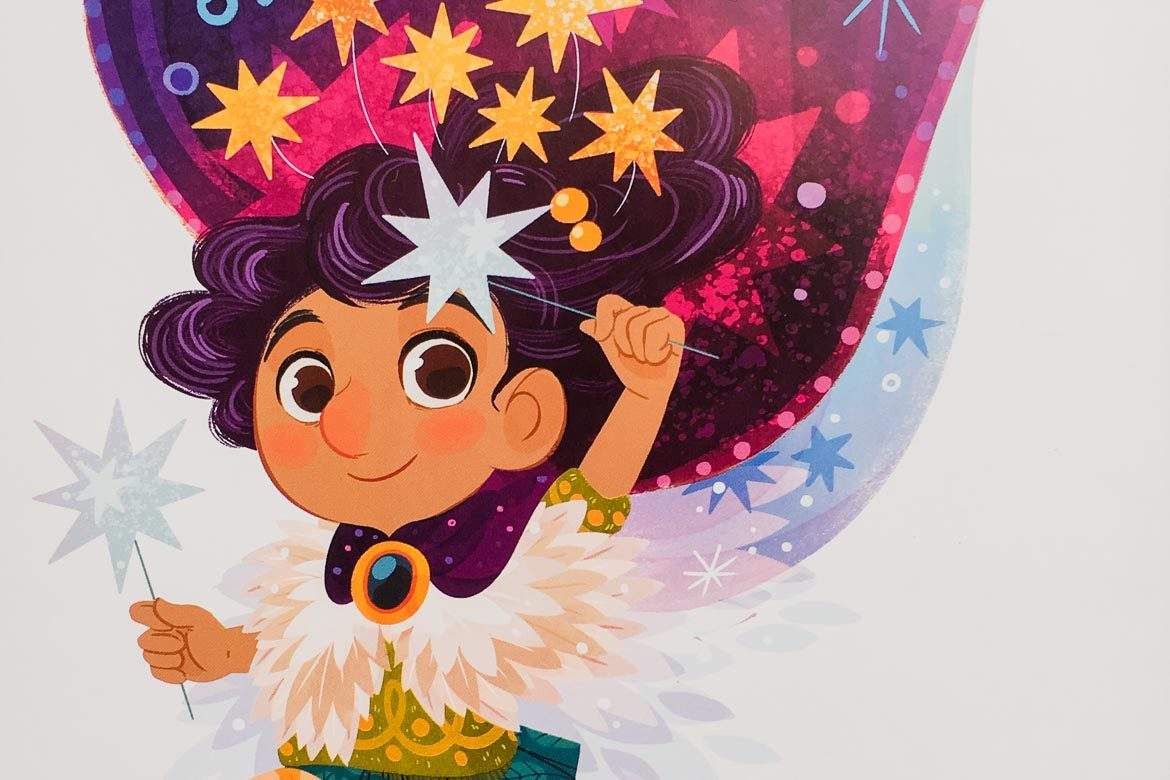
[Image Descriptions: Illustration from the inner pages of ‘Starring Carmen’ by Anika Denise & Lorena Alvarez Gomez, featuring a confident multiracial Black & Latina wearing a sparkly caped costume, waving two star-studded wands in the air.]
In this post: Fun-to-read kids books starring girls of color – focusing on agency and adventure, not race and gender
As I send my (tall, gorgeous, able-bodied, light-skinned) kids out into the world of classrooms and social events, it’s my job to keep them aware of this human tendency to idealize themselves and to only pick kids who look like them for the kickball team.
I don’t want my white-presenting kids ignoring, talking over, and objectifying women of color as they grow up. If I don’t take action now to counter the assumption that everything centers around white men – if I don’t show my sons that girls of color are peers and equals, that youthful entitlement will grow into something far more dangerous.
Our boys (actually…girls and non-binary kids, too) must learn that all genders have a right to take up space and are worth listening to, even when they’re not acting ‘like boys.’ They need to learn that the things that matter to girls matter.
This same concept goes for all targeted identities – even modern stories teach kids to believe in a weird system of gender, race, and the roles we’re ‘naturally’ supposed to take. It’s up to us as parents and educators to expose and discuss these myths and stereotypes.
Let’s learn from history and teach our kids to identify inequity. But if oppression is all the only narrative we show them, if every book featuring a Black character is about slavery and the civil rights movement, our kids will believe this false hierarchy of races is the mandate of heaven.
Systemic racism and sexism isn’t determined by white male superiority – it’s determined by greed, hate, and entrenched oppression. Uneven representation teaches our kids that people of color have a place in kids books only when they’re set apart from every day adventures and stories about our shared experiences.
This is incorrect. This is dangerous.
All kids need oodles of stories where girls of color don’t have to justify their existence – where every message isn’t about racism, sexism, and a tourist view of foreign lands. Even white boys – especially white boys – need to see girls of color who are valuable, powerful, and unique.
The Uhura test makes space for regular kids who just happen to be girls of color.
We’re looking for engaging, fun-to-read, normalizing books – which should outnumber stories featuring white boys on our shelves if we’re going to counteract the idealization of masculine whiteness. You know – the message embedded in truck books that only feature male pronouns, adventure stories full of daring boys and their moms and girlfriends, or the token stories featuring a brown girl in the background for diversity-points.
Raising Luminaries is free and accessible for readers who can’t afford a paywall. Posts may contain affiliate links, which allow me to earn a commission at no extra cost to you. Check out the full affiliate disclosure along with my statement of accountability. If you’re into supporting libraries (please do!) more than consumerism, you can also support my work directly:
Donate or shop using an affiliate link via| Paypal | Venmo | Ko-fi | Buy a t-shirt | Buy a book
*Books by women of color (author and/or illustrator) are bold and marked (*) and gender non-binary characters are noted, too. My resources for identifying makers of color are limited, so apologies if/when I make mistakes. If you find an error, leave a comment and I’ll fix it.
*’Moon Girl and Devil Dinosaur, Volume 1: BFF,’ *’Thunder Rose,’ and ‘Stand Tall, Molly Lou Melon‘
Caveat on violence: ‘Moon Girl & Devil Dinosaur contains classic comic-style smashes & bashes and ‘Stand Tall Molly Lou Melon’ includes a scene where she bowls over a bully using her powerful voice.
![]()
Ironheart, Vol 1., What’s My Superpower?, Be A Star, Wonder Woman
Caveat on violence: ‘Ironheart’ features a graphic death of drive-by shooting (sparked discussion on senseless gun violence with my 5yo) and here are. some. articles on what we need to be cautious of in representing young Black girls terms of sexualization, maturity, and colorism in comics – you’ll want to keep these in mind as you read this with kids.
‘Ada Twist, Scientist,’ ‘Little Robot,’ and ‘Fix It!‘ (non-binary)
![]()
‘Zoey & Sassafras‘ & *’My Friend Robot!,’ and *’Baby Loves Aerospace Engineering‘ (non-binary)
![]()
‘Normal Norman,’ ‘Oh No!,’ ‘Oh No! Not Again!,’ Izzy Gizmo
*’Marta Big & Small,’ ‘If I Had A Gryphon,’ and *’Raising Dragons‘
![]()
Hello Goodbye Dog, The Rabbit Listened (non-binary), The Little Little Girl With The Big Voice (which might be problematic since it plays into stereotypes about ‘loud’ black women. I’ll let you decide.)
![]()
*The Fog, The Princess And The Pony, *Mela And The Elephant
‘Hey Little Baby!,’ *’Starring Carmen!,’ and ‘Lola Reads To Leo‘
![]()
*’Double Trouble,’ ‘Phoebe & Digger,’ ‘15 Things Not To Do With A Baby.’
![]()
*’Singing Sisters – A Story of Humility,’ *‘Big Red Lollipop,’ & ‘I’m Big Now‘
![]()
‘Waiting For Baby,’ and ‘Look At Me!‘ (both non-binary), You Can Do It Too!
‘Lola at the Library,’ *’One World From Sophia,’ and ‘The Library Book‘
Caveat: ‘One Word From Sophia’ features a hyperlexic multiracial girl – which is awesome, but her family urges her to reduce her logical arguments to a simple ‘please,’ and I’m not thrilled about that.
*’Anna Hibiscus,’ ‘Zoey & Sassafras,’ Wong Herbert Yee’s season series.
The classic ‘Anna Hibiscus’ series also has a spin-off set of books for toddlers, too.
![]()
*’Marisol McDonald,’ ‘Lola,’ ‘Molly Lou Melon‘
![]()
Kenard Pak’s Season Series, What If (maybe not for suggestible, destructive kids like mine – she rips down the wallpaper and carves the furniture into a boat)
‘Little Red and the Very Hungry Lion,’ ‘Smelly Socks,’ *’I Had A Favorite Hat‘
![]()
‘One Grain Of Rice,’ and *Hana Hashimoto, Natsumi
Ages 5+
![]()
*The Umbrella Queen, *The Big Bed, *Imani’s Moon
‘Come With Me,’ ‘Smallest Girl In The Smallest Grade,’ ‘The Perfect Orange‘ (Some issues of consent with this one – The Great Nigus insists on providing a thank-you gift in exchange for the protagonist’s kindness, and my 5-year-old pointed out that he should have honored the her wishes when she insisted she didn’t want any – I’ve come to agree with him.)
![]()
*’Never Give Up,‘ *’What’s My Superpower?‘ & ‘The Thing Lou Couldn’t Do‘
![]()
I Walk With Vanessa, Nessa’s Fish
‘Come on, Rain!, ‘The Rain Stomper‘ and ‘Home In The Rain‘
*My Good Morning, *’Girl Of Mine, I Can Do It Too!
![]()
*’Splash, Anna Hibiscus!,‘ *’Bubbles, Bubbles,’ and ‘Hospital‘
![]()
![]()
‘The Airport Book’ *’This Is Our House,’ & *’Juna’s Jar‘
![]()
![]()
‘Cook It!,’ *’Bee Bim Bop,’ and ‘Baby Cakes’
Some more books that didn’t make my ‘favorites’ list, but you might enjoy:
For Kindergartners & Up: Ages 5 through elementary
Not Recommended – Problematic books to avoid
Support these resources via Paypal | Venmo | Ko-fi | Buy a t-shirt | Buy a book
Ashia Ray is the founder of Raising Luminaries.
I’m Autistic, multiracial (Chinese/Irish) 2nd-generation settler raising two children alongside my partner on the homelands of the Wampanoag and Massachusett people. I support families and educators in raising the next generation of kind & courageous leaders, so we can all smash the kyriarchy together.
Let's Connect
FREE STUFF
JOIN OUR COMMUNITY
SHOP
Posts may contain affiliate links and sponsorships, which allow me to earn a commission at no extra cost to you.
PARTNERS IN CAHOOTS
TOPICS
CONTACT
About
Raising Luminaries shares kid-centered social justice toolkits to save you time and stress. We provide step-by-step support for kyriarchy-smashing caregivers juggling parenting and advocacy without burning out.
ABOUT | MISSION | FINANCIALS | ACCOUNTABILITY
You’re welcome to share & boost this toolkit, with attribution to Raising Luminaries.
Raising Luminaries is anchored in the land of the Wampanoag & Massachusett People.
Support Wôpanâak early childhood education here.
©2014-2026 Ashia Ray of Raising Luminaries™. All rights reserved.
This page may use affiliate referral links. We may earn a small commission if you choose to make an order using these links. Learn how we use affiliate links to support our community.
Photographs via Unsplash & Illustrations via Storyset, used with permission.