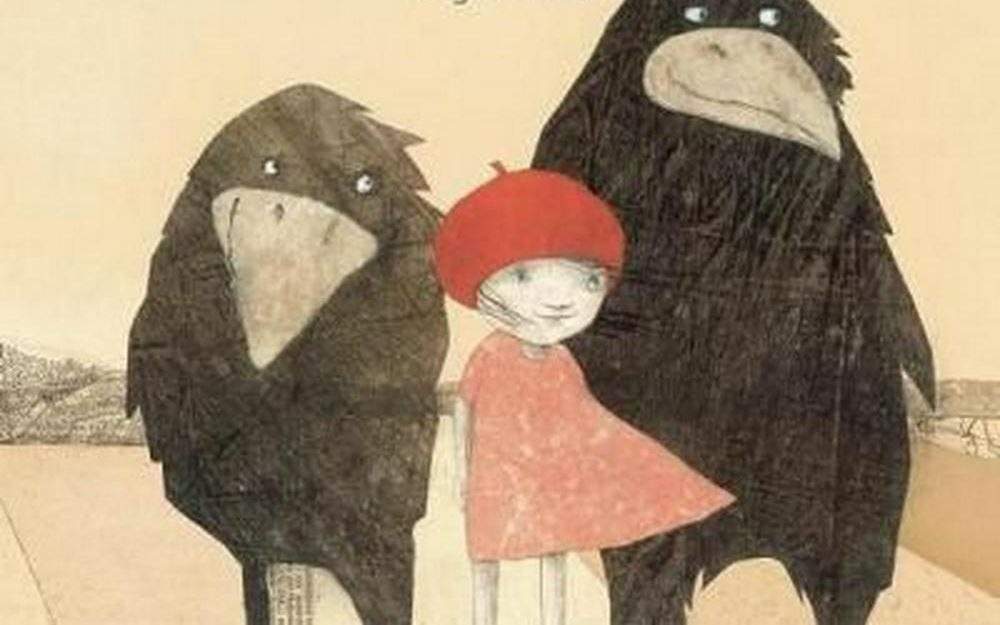
[Image Description: Book cover for Rosie The Raven, by Helga Bansch, featuring a young white-presenting child flanked by two enormous black ravens.]
This is the first of a four-series post. In this post: 5 actions to teach your kids about disability inclusion & awesome picture books to get started. Learn what to look for in kids books fostering equity for kids with disabilities – and how to spot ableist tropes.
Raising Luminaries is free and accessible for readers who can’t afford a paywall. Posts may contain affiliate links, which allow me to earn a commission at no extra cost to you. Check out the full affiliate disclosure along with my statement of accountability.
Disability 101: What Every Kid Should Know
If you’re new to the disability rights movement and a social model of disability, let’s start from the beginning.
Disabled lives are lives worth living.
Disabled lives are lives worth living.
Out loud, please;
Disabled lives are lives worth living.
Disabled kids deserve the same rights to life, autonomy, and respect as any non-disabled child.
So why do our school and library bookshelves still treat kids with disabilities as burdens to be managed.
Children’s Disability Books Are Hot Rubbish
You’ve got some work to do. We all have some work to do.
We’re raised to view disability as a flaw, people with disabilities as incomplete, as less human. From revulsion to pity, from erasure to abuse, we all need to take a look at how we view disability and how we treat each other.
Racism and sexism in kidlit is falling out of style. Somehow ableism and body-shaming is still totally okay.
Stop settling for rubbish books that feed into ableism and non-disabled supremacy.
Be an accomplice for disability rights: 5 Ways To Demand Inclusion:
Speak up & disrupt.
Demand inclusive environments and products that everybody can access. Every non-disabled student can walk up a ramp, but not everyone can walk up stairs.
Demand the same treatment for disabled people as you expect for yourself.
Don’t put your grimy hands on someone’s wheelchair and start shoving. Respect the autonomy and consent of disabled people – don’t insist on helping even when someone says ‘no.’ Don’t subject people with disabilities to non-consensual treatment that would be considered inhumane and abusive for people without disabilities.
Don’t argue with a disabled person because you think you know better about what they need. When they tell you to stop doing something or set boundaries – don’t ask them to break it down and justify their needs. Google is free. You’ve probably got access to a library. Getting the same question from strangers 10 times a day is exhausting. Your friends and family don’t owe you a masterclass, nor should they have to justify why they need accommodations for education, employment, and survival.
Make mistakes. Apologize. Move on. Do better.
If you truly want to learn about the experiences of disabled people and create inclusive future for all of us, move forward and speak up, even when you’re afraid you’ll misspeak. Be prepared to get corrected when you’re wrong. And don’t lash out at us when you make mistakes. Remember this mantra: “Creating an equitable future is not about me.”
Check your assumptions & Always presume competence.
The tone of a conversation changes immediately once I tell someone I’m autistic.Did that last sentence make you want to go back and re-read this whole thing through a new, paternalistic lens? Ableism tells you to discount and disqualify the challenging things I tell you, simply because I have a cognitive disability.
Get over it. The only person who can speak for me is me. Not my parents, not my partner, not my doctor, and certainly not allistic (non-autistic) organizations who profit off stigmatizing the disabled community. This holds true for everyone – of every age – regardless of how we communicate, whether it’s via speech, typing, or assisted-communication devices.
Stop reading ableist bedtime stories
In later posts, we’ll discuss two more vital types of books that every kid should read (Pt 2: de-stigmatizing and Pt 3: normalizing). But first let’s focus on personal agency.
Since we’re stereotyped and erased from movies and media, most public spaces are inaccessible, and many schools and workplaces segregate us to keep us invisible. Children’s stories might be the only place your children can see and learn about disabled lives and experiences.
Stories featuring disabled people with agency, who are self-empowered and competent, teaches children two things:
Complex and human disabled people exist beyond stereotypes and pity-parties. Disability does render us bad, broken, or worthless.
We do not exist as inspiration porn , sidekicks, villains and tropes to make abled folks feel good about themselves.
Empowering Stories Contain:
Competent multi-dimensional disabled protagonists represented in a spectrum of races and genders.
Open discussion of disability without shame, including advantages and challenges.
Thoughtful, inclusive language, and well-crafted images of characters with integrity
Engaging, story-based plot lines.
Condescending Books Contain:
Helpless supporting characters with disabilities who exist only to support the abled protagonist’s story (victims, villains & burdensome disabled family.) [Problematic: French Toast, My Brother Is Autistic, Netflix’s Atypical]
Characters worthy of acceptance, success, and love, only after they overcome disability, mask their disability, or go above-and-beyond to make up for them. [Problematic: My Friend Maggie, My Brother Charlie, The Patch]
Disabled characters expected to ‘suck it up’ or keep up with abled people despite pain and abuse, or disregard the real challenges and dangers of living in a world without accommodations. [Problematic: Armond Goes To a Party, Dylan the Villain]
Disabled characters are pitiful and miserable until they can ‘overcome’ disability – usually with the help of non-disabled saviors. [Problematic: Ricky The Rock That Couldn’t Roll– that sad face, OMG.]
Captioned age ranges are for when my sons got ‘the gist’ of the story with discussion & alternative readings – most contain text for much older ages.
Understand Disability Acceptance (NOT just ‘awareness’)
Ages 3.5+
In ‘We’ll Paint The Octopus Red,’ a big-sister-to-be helps her parents recognize that her new baby sibling with Down syndrome will be just as valuable a family member as any other child. Avoid the sequel though, it’s awful. I’m still looking for a better book that centers a person with Down Syndrome’s voice, rather than a sibling. (Down Syndrome)
Ages 4+
In ‘All My Stripes,’ Zane’s mom lists the things she loves about his unique autistic mind. Caveats: This book contains a foreword by a leader of the reviled autism-exploitation group Autism Speaks, and the non-autistic illustrator created non-literal (re: non-neurodivergent) illustrations, as the ‘stripes’ listed aren’t literally on the zebra. Irritating. (Autism)
Ages 8+
‘Fish In A Tree’ is the story of a clever girl with undiagnosed dyslexia who has been labeled as a troublemaker in her attempts to hide her disability. Caveats: One character is presumably autistic and wears a ‘Flint’ T-shirt, but the author uses this without addressing either social disabilities or the Flint water crisis – COWARDICE. It’s also been critiqued by wealthy folks who don’t believe that physical abuse and bullying would be overlooked by adults in a public school (HAH!). To read more on the intersection of poverty and lack of adult intervention with bullying, click here. (Dyslexia)
Ages 4.5+
‘Naomi Knows It’s Springtime‘ – ignore the outdated, blurry illustrations, have kids close their eyes when you read this. Naomi can tell it’s spring in a multitude of ways using other senses and by being a reasonably intelligent human. When her condescending neighbor ties to throw a pity party for her, Naomi has none of it. (Blindness)
Ages 5.5+
‘The Hickory Chair‘ – more outdated, blurry (rather terrible nonsense) illustrations, but the blind narrator navigates complex themes of respect, competence, and loss in a simple story that will grow with kids over time. (Blindness)
Ages 2.5+
‘Mama Zooms‘ is the story of a boy and his wheelchair-using mother and the great life they have together. (Mobility disabilities/wheelchair user)
Ages 4+
‘Silent Lotus‘ is the story of a Cambodian girl and her family who grow to accept and understand her disability, allowing her to focus on her strengths.
(Deaf, non-speaking)
Ages 1-4
The Lion Who Had Asthma, written for very young kids who need nebulizer treatments, doesn’t frame the asthmatic protagonist as weak. Instead, he’s a strong lion, a powerful hippo, etc.
And sometimes he just needs a nebulizer treatment to help him roar loudly. My 3 year-old loved this, and it helped him feel powerful to imagine his nebulizer as pilot’s gear. It also helped my non-asthmatic son see asthma doesn’t make his brother frail or less-than. Simple and empowering, it’s super helpful if you’ve got a little one who isn’t always enthusiastic about treatments.
Melanie stands alone as an awesome story for the fairy tale adventure and riveting plot. BUT ALSO IT GETS WAY COOLER.
Melanie and her Grampa are all like “Dammit, oh nos. Melanie is Blind.” (I’m paraphrasing.) Grampa goes off to find a healer, insisting Melanie can’t make the dangerous trip because she’s Blind (presuming incompetence – it’s a thing!) Of course he doesn’t make it.
Melanie goes on to save her Grampa and a mess of other dudes who get captured by an evil troll. Through the story, we see how Melanie is kick-ass at things we sighted folks wouldn’t be able to manage. In the end, Melanie points out that ‘healing’ her blindness would be a bad idea – it was her abilities as a Blind woman that allowed her to rescue everyone.
So. BOOM! How ya like her now, GRAMPA?!
Understand The Social Model Of Disability
Ages 1.5+
‘The Red Lemon‘ – allegory highlighting the social model of disability, where many disabilities considered flaws are only a challenge in a world not designed for us.
Ages 2+
‘Red: A Crayon’s Story‘ – allegory for undiagnosed disability and identity dissonance. It works for LGBQTI+ youth, but as a young autistic girl growing up undiagnosed and confused, this story hits me in the gut.
Ages 3+
‘Finklehopper Frog‘ is bullied and unaccepted until he realizes jogging isn’t the only to get around.
Ages 4+
‘Yuko-Chan And The Daruma Doll‘ – This a kick-ass Blind girl who perseveres in situations where sighted people (and old dudes) give up, and goes on to save her village using innovation and hard work despite those around her assuming she’s incompetent. (Blindness). Great for discussions of intersections on adultism, sexism, and ableism.
Ages 3.5+
‘Rosie The Raven‘ – A human girl born to a raven family, Rosie’s family accepts and accommodates her disabilities (such as the inability to fly), and she grows up confident and happy with the way she is.
‘Lovely‘ (Visual disabilities & differences, body acceptance) – Celebrating birthmarks, age-spots, vitiligo, gender spectrums, athletes with prosthetic devices, heterochromia iridum, a wide range of heights, weights, ages and sizes, plus more stuff I don’t even know the names for – all happy the way they are. (Various)
If you are disabled/have disabilities and feel misrepresented in this post, your comments are welcome and I invite your perspective, as the community of disability rights advocates is not monolithic and your perspective matters.
Before any non-disabled folks chime in suggesting I switch to person-first language – please don’t pretend it’s just concerned advice. I’ll leave it to you to google how assuming I’m not disabled because I’m eloquent, assuming I’m not disabled enough, tone-policing, and derailing my point is an act of supremacy.
The use of person-first language centers non-disabled status as superior. It separates us from our disabilities – as if our disabilities don’t affect who we are and/or we should be ashamed of them. You wouldn’t call me a ‘person with womanhood,’ ‘a person with right-handedness,’ nor ‘a person with mixed heritage.’
I am a right-handed, multiracial, autistic woman and I am not ashamed.
Hi, I’m Ashia Ray [they/them], founder and Head Custodian of Raising Luminaries. I create educational resources for overworked caregivers juggling advocacy, parenting, and community care.
My goal with Raising Luminaries is to collaborate with families and educators in raising the next generation of kind & courageous leaders, so we can all smash the kyriarchy together.